
Giandel inverter remote port: wiring and phone control
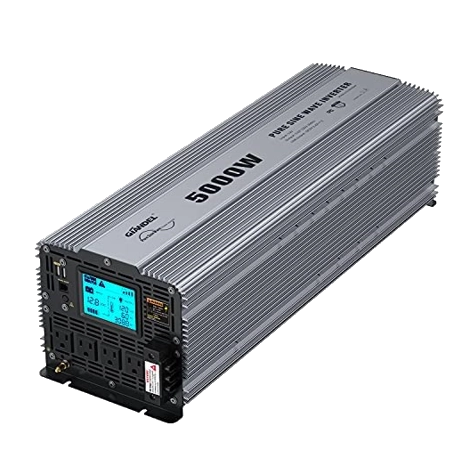
Giandel RJ11
- PS-1200JCR
- PS-1500SAR
- PS-2000SDR
- PS-3000KAR
- PS-4000QAR
- PS-5000QAR
- PM-3000KAR (modified sine)
Giandel’s pure sine inverters have an RJ11 port on the front, marked “Remote Control Interface”, for the R3 wired remote that comes in the box. The R3 has a round power button, a green POWER light, a red FAULT light and a five-bar battery indicator. That port is all our Inverter Controller needs: it only uses the power button and the POWER light, and leaves the rest alone.
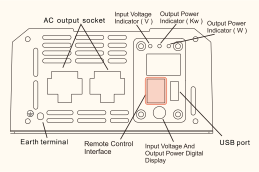
The Remote Control Interface on the front of a PS-1200JCR. Drawing from Giandel’s manual.
Switching is a toggle, with one twist: Giandel’s manual says to hold the button for a little over half a second. A long press turns the inverter on, the next one turns it off; a quick tap is ignored. Our controller does the same thing, holding the contact long enough for the inverter to notice. The POWER light is on while the inverter runs, so our controller can read it and tell you whether the inverter is actually running.
Finding the right wires
Giandel doesn’t publish which pin does what. The battery bars most likely come in on their own line or as data, so expect more than four wires to be in use. Two of them are the power button, two are the POWER light, and the multimeter check below tells you which are which. Leave the other wires alone.
Checking it with a multimeter
We know how this remote works, but not yet which pins do what, so this check is the part that makes it work. Unplug the cable from the R3 and put your multimeter in continuity mode on the remote’s own jack. Hold the power button down and test the pins against each other: the pair that beeps only while the button is held is your switch pair. Then plug the cable into the inverter only and touch those two wires together at the loose end for about a second: the inverter should start, and the next one-second touch should stop it. If nothing happens, the cable may be rolled over, so try the mirrored pair. To find the POWER light, put the multimeter on DC and look for the pair that gives a reading while the inverter runs and none when it’s off. Don’t confuse it with the FAULT light, which only comes on when something is wrong. If all of this matches, you’re good to go.
One thing to watch out for: Giandel sells a lot of inverters, and not all of them come with the R3 remote. This page is about the models listed above with the RJ11 Remote Control Interface port.
Further reading
We haven’t had a Giandel on our own bench yet. What’s on this page comes from Giandel’s own manuals for the PS-1500SAR and PS-5000QAR, which show the remote and how it works but not the pin functions. Once a customer has done the check above, we’ll add the pinout here. These are worth a read if you want the details:
- Manuals+: Giandel PS-1500SAR user manual
- Manuals+: Giandel PS-5000QAR user manual
- Manuals+: Giandel PS-1200JCR user manual (PDF)
Giandel® is a trademark of its respective owner. VanTurtle is not affiliated with, endorsed by, or sponsored by Giandel. We only mention them to show compatibility.
Switch it from your phone
Our Inverter Controller plugs into the Giandel remote port and lets you switch it over Bluetooth, from the Home app on iPhone or Device Controls on Android. No cloud or hub, so it keeps working off-grid. Tell us your model when you order, and after a quick multimeter check on your end we’ll set it up for you. From €19,99.
